
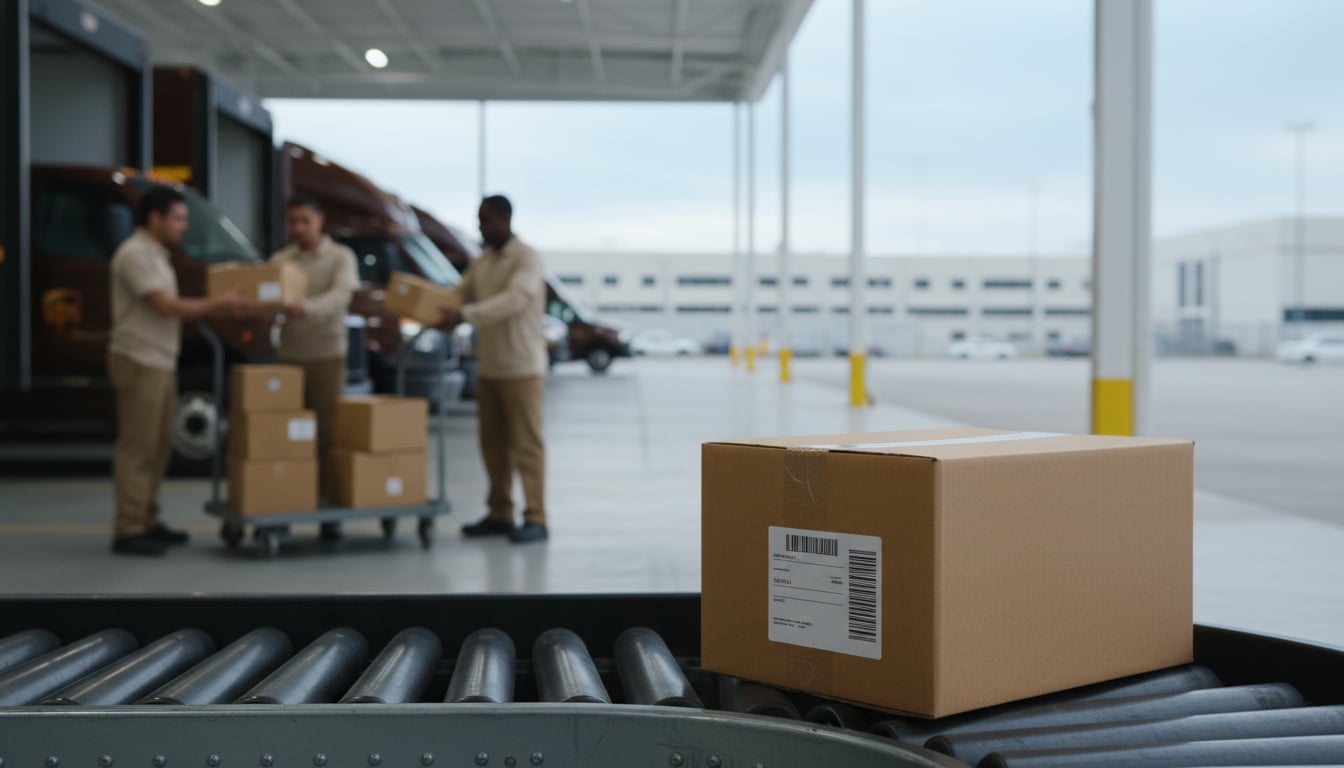
UPS Ground Saver: 2026 Complete Guide, Rules & Rates
Navigating the world of shipping options can feel overwhelming, especially when you’re trying to find that sweet spot between cost and reliability. If you’re an e-commerce seller or just someone shipping a package that isn’t in a rush, you’ve likely come across UPS Ground Saver. It’s an economical service with a bit of a history, and understanding its ins and outs can save you a significant amount of money.
This guide breaks down everything you need to know about UPS Ground Saver, from its recent rebranding to its specific rules and best use cases.
What is UPS Ground Saver? An Overview
At its core, UPS Ground Saver is a budget friendly ground shipping service designed for lightweight, non urgent residential deliveries within the contiguous United States. Think of it as the slow and steady option in the UPS lineup. It’s a contract only service, meaning you need to have it specifically enabled on your UPS account to use it.
The service leverages the vast UPS ground network to offer a cost effective alternative to standard UPS Ground, making it a popular choice for businesses looking to manage shipping costs for customer orders where speed isn’t the top priority.
The Big Rebrand: From SurePost to Ground Saver
If the name UPS Ground Saver feels new, that’s because it is. For years, this service was known as UPS SurePost. In early 2025, UPS officially rebranded SurePost to UPS Ground Saver, with the change taking effect on April 2, 2025.
This was more than just a name change. It signaled a major operational shift. The old SurePost model was a hybrid service that relied on the U.S. Postal Service (USPS) for the final leg of the delivery. With the rebrand, UPS took full control of the entire journey, meaning packages now stay within the UPS network from pickup to drop off. This update streamlined the process but also brought changes to service features, pricing, and insurance coverage.
How UPS Ground Saver Works: The Basics
So, what are the key things to know before you start using this service?
- Contract Only: You can’t just walk into a UPS Store and ask for UPS Ground Saver. It must be part of your negotiated UPS contract.
- Domestic Only: The service is limited to the 48 contiguous U.S. states. You cannot use it for shipments to Alaska, Hawaii, U.S. territories, or international destinations. For cross‑border options, see our guide to shipping to Canada from the U.S.
- Residential Focus: It’s optimized for business to consumer (B2C) shipments going to residential addresses.
- No Guarantees: As an economy service, it does not come with a guaranteed delivery date like expedited options.
Even without a guarantee, recipients still benefit from reliable UPS tracking and the option to manage their delivery through UPS My Choice.
The Main Attraction: Cost Savings
The number one reason shippers use UPS Ground Saver is to save money. By offering a slightly slower transit time and formerly using USPS for the final mile, the service was built to be a low cost leader. It’s most effective for lightweight packages, with the biggest savings typically seen on parcels weighing under 10 pounds. If you’re deciding between carriers for similar shipments, see our guide on which is cheaper: UPS or USPS.
While UPS adjusted its pricing in 2025, which included rate increases of around 8 to 10% for many shippers, UPS Ground Saver often remains one of the most economical choices for small, non urgent packages. To see how the savings stack up for your specific shipment, using a tool to compare shipping rates from multiple carriers is a smart move.
Delivery Times and a Major Last Mile Change
Understanding the transit time and delivery process is crucial for managing customer expectations.
Expected Delivery Days and Transit Time
Delivery times for UPS Ground Saver typically range from 2 to 7 business days. A good rule of thumb is to take the standard UPS Ground transit time and add one or two extra days. A package traveling across the country will naturally take longer than a regional shipment.
Deliveries are made Monday through Saturday. With the move away from the USPS handoff, Sunday deliveries, which were sometimes possible under the old SurePost system, are no longer a feature of this service.
The End of Last Mile Delivery via USPS
The most significant change in the transition from SurePost to UPS Ground Saver was the elimination of the USPS last mile delivery. Previously, UPS would transport a package across its network and then hand it off to the local Post Office for the final delivery to the recipient’s doorstep. This hybrid model was cost effective and allowed for delivery to P.O. boxes.
As of 2025, that partnership for this service has ended. All UPS Ground Saver packages are now delivered by UPS drivers, which provides more control and consistent tracking but eliminates the ability to deliver to P.O. boxes.
Understanding the Labels and Tracking
Even though USPS is no longer involved, you might still see some remnants of the old system on your shipping labels.
Label Interpretation and the Dual Tracking Number
A UPS Ground Saver label can sometimes be confusing because it may feature two tracking numbers. You’ll see the primary UPS tracking number (starting with “1Z”) and often a secondary USPS tracking number printed near the bottom.
This dual number is a holdover from the SurePost system. The key thing to remember is that the UPS tracking number is the only one you need to use. The USPS number is for internal routing purposes and doesn’t mean the package should be dropped off at a Post Office.
How Tracking Works
Tracking a UPS Ground Saver package is simple and reliable. You use the UPS tracking number on the UPS website or through your shipping software. The tracking provides full end to end visibility with key milestones, including:
- Pickup
- In Transit
- Out for Delivery
- Delivered
Because UPS now controls the entire journey, recipients can use UPS My Choice® to manage their deliveries, a feature that wasn’t available when USPS handled the final mile.
Important Service Rules and Restrictions
Before you commit to using UPS Ground Saver, be aware of its specific rules regarding insurance, handling, and delivery eligibility.
Insurance and Carrier Liability
This is a critical detail. The included liability coverage for UPS Ground Saver is significantly lower than for other UPS services. With the 2025 rebrand, UPS reduced the default declared value coverage from $100 down to just $20 per package.
If your item is worth more than $20, it is highly recommended that you purchase additional declared value coverage. This can usually be done easily through your shipping software for a small fee.
Drop Off and Pickup Options
Getting your packages into the UPS network is straightforward. You can:
- Drop them off at The UPS Store, a UPS Customer Center, or a UPS Access Point location.
- Place smaller packages in a UPS Drop Box.
- Have them collected during a regularly scheduled UPS pickup.
A Note on Tendering Packages
A crucial rule to follow is “Tender to UPS Only.” This means your UPS Ground Saver packages must always be given directly to UPS. Never drop them at a USPS Post Office or in a blue USPS collection box. Doing so will cause major delays or result in the package being returned, as it does not have USPS postage.
What Happens with Returns?
If a package is undeliverable, it will be returned to the sender through the UPS network. The process is similar to any other UPS service. The tracking information will be updated to show that a return to sender is in progress. Because you may be charged for the return trip, it’s always best to verify addresses before shipping. If you want to offer an easy return option, learn how to create a prepaid return label.
Eligibility: Service Area, Addresses, and Package Size
Not every package or destination is eligible for UPS Ground Saver.
Service Area and Address Eligibility
- Area: Continental 48 U.S. states only.
- Ineligible Addresses: P.O. Boxes, APO/FPO military addresses, Alaska, Hawaii, and U.S. territories are not served by UPS Ground Saver.
This is a significant change from the old SurePost service, which could deliver to P.O. boxes via USPS. Always ensure you have a valid physical street address. If you must ship to a P.O. Box, consider USPS options like Priority Mail Flat Rate boxes.
Size and Weight Limits
Your packages must fall within specific dimensions to qualify:
- Maximum Weight: 70 pounds.
- Maximum Size: 130 inches in combined length and girth.
- Maximum Length: 60 inches on the longest side.
- Minimum Size: Packages must be at least 6" x 4" x 0.75".
Exceeding these limits can lead to hefty surcharges or the shipment being rejected. For heavier boxes, compare options in our guide to the cheapest way to ship a 20 lb box (UPS vs USPS).
The “No Reroute” Policy
Once a UPS Ground Saver package is in transit, it cannot be rerouted or intercepted to a different address. Services like UPS Delivery Intercept® do not apply. This policy makes address accuracy extremely important at the time of shipping, as the only alternative for an incorrect address is to have the package returned.
Watch Out for Surcharges
Like other shipping services, UPS Ground Saver is subject to various surcharges. These can include:
- Delivery Area Surcharges (DAS) for remote locations.
- Additional Handling fees for non standard packaging.
- Residential Surcharges.
- Fuel Surcharges.
In 2025, UPS increased some of these surcharges, particularly for deliveries to less accessible areas. To get a clear picture of the total cost, use an online shipping calculator that accounts for these potential fees, and review our guide on how to calculate shipping costs (including dimensional weight).
Using UPS Ground Saver with Shipping Software
Since this is a contract service, integrating it into your workflow happens through your shipping platform. If you’re standing up a process from scratch, see our small business shipping setup guide.
How to Enable in ShipStation
To use UPS Ground Saver in a platform like ShipStation, you need to complete two main steps:
- Confirm with UPS: Contact your UPS representative to ensure UPS Ground Saver (formerly SurePost) is active on your contract.
- Activate in ShipStation: Go to your UPS carrier settings within ShipStation and enable “Consolidation Services.”
Once enabled, UPS Ground Saver will appear as a selectable service for eligible shipments.
Rate Availability in Other Platforms
Because it’s a contract service, UPS Ground Saver rates might not appear in all multi carrier rating tools automatically. Some platforms require you to request UPS rates specifically to see the Ground Saver option. If you don’t see it, check your carrier settings or contact your software provider. The rates will not appear on public consumer facing calculators on the UPS website.
Automating with Shipping Rules
One of the most efficient ways to use UPS Ground Saver is with automation rules in your shipping software. You can set up rules to automatically assign this service to orders that meet specific criteria, for example:
- If an order weighs less than 10 lbs,
- And the delivery address is residential in the contiguous U.S.,
- Then apply UPS Ground Saver.
This ensures you consistently use the most cost effective option for eligible shipments without manual intervention.
Frequently Asked Questions about UPS Ground Saver
1. Is UPS Ground Saver the same as UPS Ground?
No. UPS Ground Saver is a slower, more economical service intended for non urgent, lightweight residential shipments. Standard UPS Ground is faster and has a higher default insurance value.
2. Can I use UPS Ground Saver to ship to a P.O. Box?
No. As of late 2024, UPS Ground Saver no longer delivers to P.O. boxes because it no longer uses USPS for the final delivery.
3. What is the biggest advantage of using UPS Ground Saver?
The primary advantage is cost savings, especially for e commerce businesses shipping a high volume of small packages under 10 pounds where delivery speed is not a critical factor.
4. How much insurance comes with UPS Ground Saver?
It includes a default liability of only $20 per package. This is a significant decrease from the previous $100 coverage offered under the SurePost name.
5. Is tracking reliable for UPS Ground Saver?
Yes, tracking is very reliable. Since packages now remain entirely within the UPS network, you get end to end visibility with regular updates, just like with other UPS services.
6. Do I need a special account to use UPS Ground Saver?
Yes, it is a contract only service. You must have it enabled on your business UPS account by your UPS representative before you can access the rates and create labels.