
Streamlining returns with prepaid or scan-based return labels
Returns are part of ecommerce, and a smooth return process is what brings customers back. Most online shoppers check a store’s return policy before they buy, so easy, free returns can win you the sale.
Ever wondered how competitors slip a return label into the box, or let shoppers return an item without printing anything? This guide covers the software and carrier features behind modern returns: prepaid and scan-based labels, branded self-service portals, and printerless QR-code returns from UPS, USPS, and FedEx.
Why free returns matter
Most online shoppers expect free return shipping, and many won’t order without it.
Free returns let customers buy with confidence, knowing a return will be painless.
They build trust and set your store apart from competitors.
Yes, free returns cut into margins. But they drive more sales and more repeat customers.
Providing prepaid return labels
Make the return as easy as possible. Customers get a prepaid label one of two ways.
The merchant provides the label
Include a scan-based label in the box. Also called a pay-on-use label, you are charged only when the carrier scans it, not before.
Or create a prepaid label and email it once you approve the return. This needs a little coordination with your support team, and the customer needs a printer and tape.
The customer creates the label
For partial returns, where the item weight changes, ask the customer to buy the return label and reimburse them by deducting it from the refund or issuing store credit. It adds some support work, but it suits some stores.
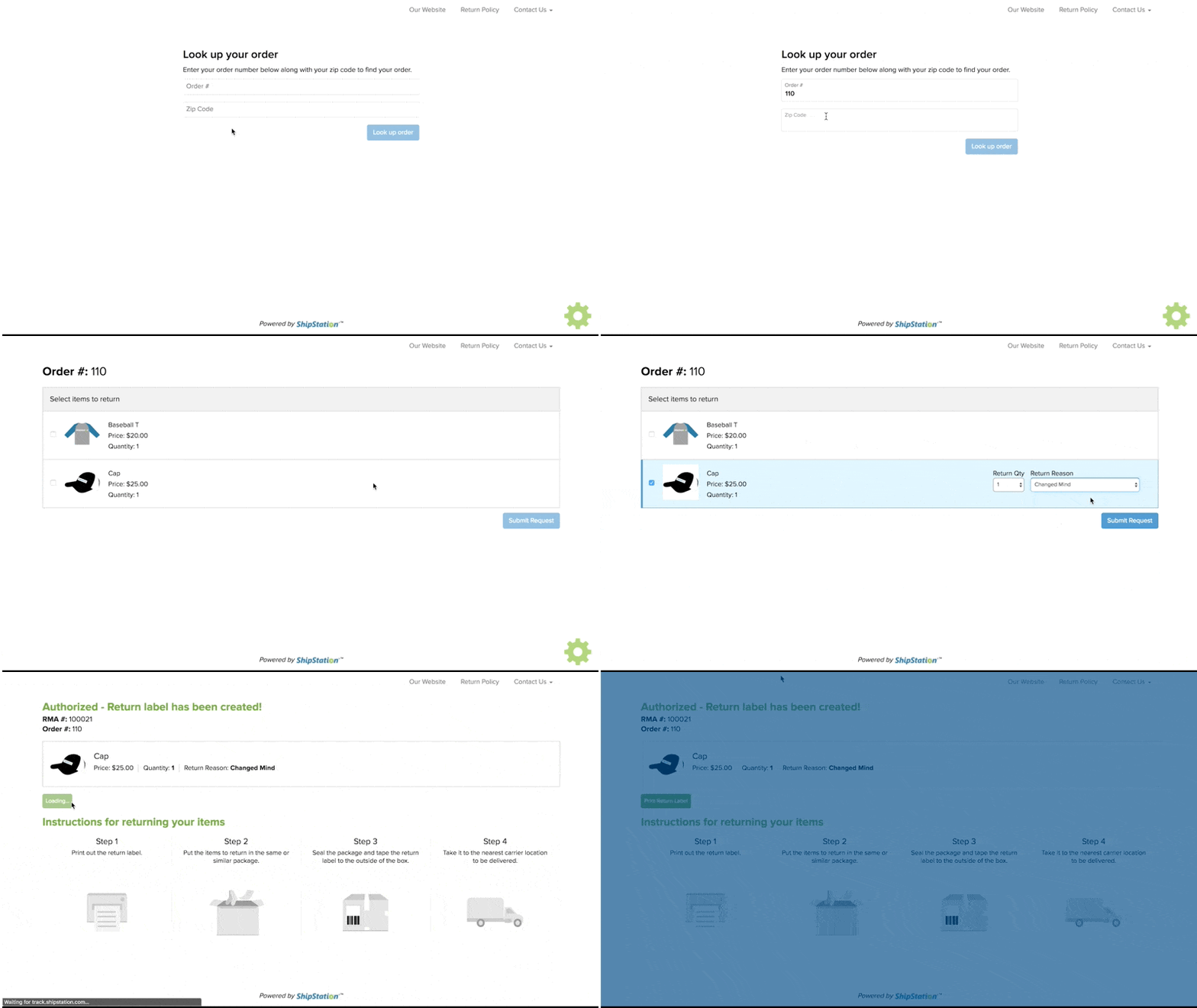
Better, let customers pull their own label from a self-service portal, the way Amazon has trained shoppers to expect. ShipStation’s branded returns portal lives on your own URL with your logo and colors: the customer starts a return, picks the items, and gets a label in minutes. ShipStation rebuilt the portal in 2025 with full return-merchandise-authorization (RMA) tracking in one dashboard.
Printerless returns with QR codes
The newest convenience is the printerless return: instead of a printed label, the customer gets a QR code, shows it at a carrier location, and the staff prints the label. No printer, and often no box. All three major carriers now offer it:
USPS Label Broker turns a return into a QR code the customer scans at a Post Office counter or self-service kiosk, which prints the label for free.
UPS accepts QR-code returns at UPS Store locations through its Happy Returns network, where customers can drop off loose items with no box.
FedEx Easy Returns takes a QR code at FedEx Office, FedEx Ship Centers, and Walgreens for items under 10 lb, again with no label or box to supply.
On the software side, Shippo can generate USPS Label Broker QR codes for printerless returns, and developer platforms like ShipEngine expose the same. If a missing printer is the main thing standing between a customer and an easy return, a QR-code option removes that friction.
Save on return shipping
Free returns only pay off when return shipping is cheap. To keep costs down:
Use discounted rates: software like ShipStation prints discounted USPS, UPS, FedEx, and DHL Express labels, up to 88% off retail.
Charge the label cost on partial returns: deduct the exact prepaid-label price from the refund when the weight changes. A returns portal can do this automatically; scan-based labels can’t, unless you send a separate parcel per item.
Set an order minimum to qualify for free returns.
Refund the item price but keep the original outbound shipping fee.
Streamline returns with shipping software
Shipping software like ShipStation or Shippo automates the busywork:
Generate a prepaid return label for any carrier in a few clicks, and email it straight from the software.
Offer self-service printing or a QR code through a returns portal.
Notify customers automatically when their return arrives.
Track returns alongside outbound shipments in one dashboard.
Done well, returns become a loyalty tool. Fast, free, printer-optional returns bring customers back, and automating the process turns a cost center into repeat sales.