
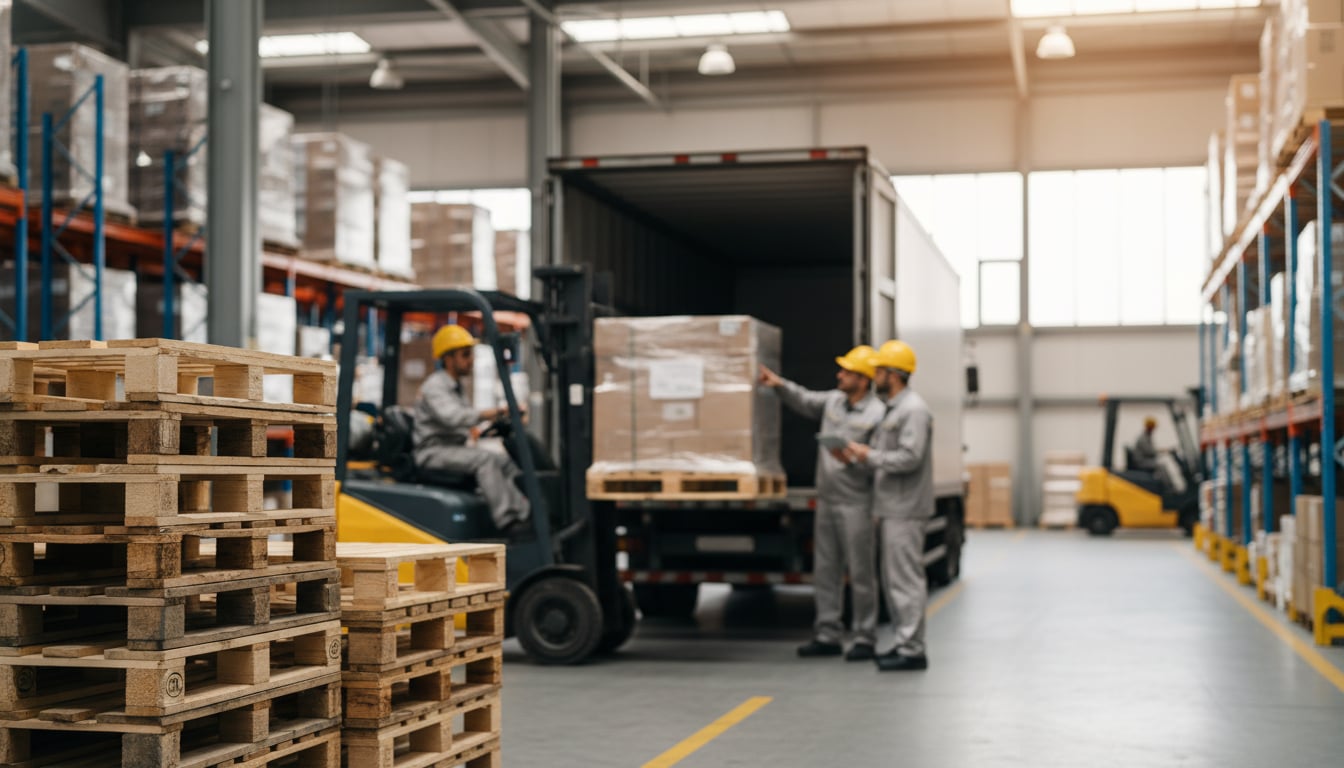
Pallet Shipping Cost: 2026 Rates, Fees & Savings Guide
Figuring out your pallet shipping cost can feel complicated. While the final price depends on many factors, a standard LTL pallet shipment within the U.S. can range from under $200 for a short local move to over $1,000 for a cross-country delivery. From weight and density to extra service fees, many variables influence your total bill.
This guide breaks down every component of your pallet shipping cost, giving you the clarity to ship smarter and save money.
The Core Factors Driving Your Pallet Shipping Cost
Before you can get an accurate quote, you need to understand the foundational pieces of information that every carrier uses to calculate your price.
Shipment Dimension and Weight
This is the starting point. Carriers need the exact length, width, and height of your palletized shipment, along with its total weight. Remember to include the weight of the pallet itself in your calculation (see common pallet types and sizes). Underestimating this can lead to surprise fees after a carrier reweighs your shipment.
Freight Density Calculation
It’s not just about how heavy your shipment is, but how much space it takes up. Freight density, measured in pounds per cubic foot (PCF), is a crucial factor. To calculate it, you first find the cubic feet (Length x Width x Height in inches / 1728) and then divide the total weight by that number.
Generally, items with higher density (heavy and compact) cost less to ship per pound than items with low density (light and bulky). This calculation is a key part of determining your pallet shipping cost.
Freight Classification and the NMFC
The National Motor Freight Classification (NMFC) is a standardized system that groups commodities into 18 classes, ranging from 50 to 500. This class is determined by four key characteristics:
- Density: How much the item weighs relative to its size.
- Stowability: How easily it can be loaded and transported with other freight.
- Handling: How difficult it is to load, unload, and move.
- Liability: The value of the item and its risk of being damaged or stolen.
A low class number (like 50) represents dense, easy to handle items, resulting in a lower pallet shipping cost. A high class (like 500) applies to very fragile or low density items, which are more expensive to ship.
Service Level (LTL vs FTL, Expedited)
The type of service you choose directly impacts your price.
- Less Than Truckload (LTL): Your pallets share space on a truck with shipments from other companies. This is the most common and cost effective option for shipping one to ten pallets. New to LTL? See our LTL freight basics guide.
- Full Truckload (FTL): You book an entire truck for your exclusive use. This is often more efficient for larger shipments, typically around 10 to 12 pallets or 15,000 pounds. A standard 53 foot van can hold approximately 26 single stacked pallets.
- Expedited: If your shipment is time sensitive, you can pay more for guaranteed or time definite delivery services.
Origin and Destination Distance
Naturally, the farther your pallet has to travel, the higher the base transportation charge will be. Carriers use pricing structures based on zones or mileage lanes to determine the cost for moving freight between any two points. Sometimes, a carrier might use an “interline” partner to complete a delivery in a remote area, which can occasionally add time to the transit.
Decoding Your Quote: Fees, Options, and Hidden Costs
Once you have the basics down, the next step is understanding all the line items that can appear on your freight quote and final invoice.
Surcharges (Liftgate, Residential, Inside Delivery, Fuel)
These additional fees, often called accessorials, compensate the carrier for services beyond a standard dock to dock delivery. Common surcharges include:
- Liftgate Service: Required when the pickup or delivery location does not have a loading dock or forklift.
- Residential Delivery: Delivering to a non commercial location, such as a home, school, or storage unit, requires a special fee.
- Inside Delivery: If the driver needs to move the freight beyond the immediate receiving area, this fee applies for the extra time and labor.
- Fuel Surcharge: A fee that fluctuates with the cost of diesel fuel. It’s typically indexed weekly and applied to your base rate.
Declaring these needs upfront is critical to avoiding unexpected adjustments to your pallet shipping cost.
Flat Rate vs Custom Quote
You generally have two pricing models to consider:
- Flat Rate: Some carriers offer zone based flat rate pricing for shipments that fit within specific size and weight limits, like the FedEx Freight Box. This offers predictable pricing but is often restrictive and may not be an option for all goods.
- Custom Quote: This is the standard method, where the price is calculated based on your shipment’s specific dimensions, weight, class, distance, and required accessorials.
Domestic vs International Rate
Shipping a pallet internationally involves more than just a higher transportation fee. The pallet shipping cost will also include expenses for customs clearance, brokerage, duties, and taxes. Additionally, any solid wood packaging, including pallets and crates, must be treated and marked according to ISPM 15 international standards to prevent the spread of pests. Using plastic pallets or engineered wood can simplify compliance. For a step‑by‑step overview, see how to ship internationally.
Strategies for Reducing Your Pallet Shipping Cost
Being proactive and informed is the best way to manage your shipping spend. Here are proven strategies to get the best possible pallet shipping cost.
Carrier Comparison for Best Rate
Never settle for the first quote you receive. Prices for the same lane and service can vary significantly between carriers, especially when it comes to accessorial fees. Using a freight broker or a 3PL (third‑party logistics provider) allows you to compare multiple options side by side to find the best blend of price and transit time.
Discount and Rate Shopping
Most LTL pricing starts with a carrier’s published base rate, which is then reduced by a negotiated discount. However, be aware of the Absolute Minimum Charge (AMC), which sets a price floor for any shipment, no matter how large your discount is. Rate shopping platforms are excellent tools for making these complex pricing structures transparent. Here’s where to find online shipping discounts without negotiating a carrier contract.
Pallet Material Impact on Cost
The pallet itself contributes to the total billable weight. A heavy wood pallet costs more to ship than a lighter plastic alternative. Since LTL rates are often calculated per hundredweight (CWT), every pound you can save without compromising durability helps lower your pallet shipping cost.
Pallet Weight Impact on Cost and Zone
Heavier shipments often have a lower cost per hundred pounds, so consolidating freight can sometimes be advantageous. The total weight is always considered alongside the distance (or zone) it’s traveling. A heavier pallet will cost more than a lighter one going to the same zone.
Packaging and Securing to Prevent Damage Costs
A damaged shipment can destroy your profit margins. Following proper packaging and securement guidelines is not just a good idea, it’s a requirement. According to the FMCSA, cargo must be secured to prevent shifting or falling from the vehicle. Properly strapping goods to the pallet, using edge protectors, and applying stretch wrap tightly will minimize the risk of damage and the associated costs.
A Comprehensive Cost Reduction Strategy
To summarize, you can actively reduce your pallet shipping cost by:
- Providing precise dimensions, weight, and freight class.
- Confirming any special service needs like a liftgate upfront.
- Consolidating shipments to achieve better weight breaks.
- Shopping rates across multiple carriers and brokers.
- Choosing the most economical service level that meets your deadline.
- Using proper packaging to avoid costly damage claims.
Mastering these details takes practice. A great way to start is by learning the fundamentals of rate shopping with smaller packages. You can use a free tool like the Online Shipping Calculator to compare parcel rates and understand concepts like zones and surcharges before tackling freight.
How to Get an Accurate Pallet Shipping Quote
When you’re ready to get a price, you’ll need to provide the following details:
- Origin and destination ZIP codes.
- The number of pallets in your shipment.
- The dimensions (L x W x H) and weight of each pallet.
- The freight class for your commodity.
- Any required accessorial services (e.g., liftgate, inside delivery).
Many carrier and broker websites allow you to get a quote and then immediately generate a Bill of Lading (BOL) from that information, streamlining the process. If you want to learn the building blocks of shipping costs before you book, you can compare parcel shipping rates instantly to see how factors like weight and distance work, or read how to calculate shipping costs.
Frequently Asked Questions About Pallet Shipping Cost
What is the biggest factor affecting pallet shipping cost?
While several factors are important, the combination of weight, dimensions (which determine density and freight class), and distance are the primary drivers of your base rate. Surcharges for special services can also have a significant impact.
How can I lower my pallet shipping cost?
The most effective strategies are to provide accurate shipment details to avoid fees, compare quotes from multiple carriers, consolidate freight when possible, and ensure your goods are packaged properly to prevent costly damage.
Is LTL always cheaper for shipping a few pallets?
For one to nine pallets, LTL is almost always the more economical choice. However, as you approach 10 or more pallets, it becomes worthwhile to get a quote for a full truckload (FTL), which can sometimes be cheaper and faster.
Why was my final bill higher than my initial pallet shipping quote?
This usually happens when the carrier has to add charges after the fact. Common reasons include incorrect weight or dimensions, a misstated freight class, or the need for an unplanned service like a liftgate or residential delivery that wasn’t declared on the original quote.