How to Avoid Retail Counter Rates at UPS Store (2026)
TL;DR
Retail counter rates at The UPS Store are the highest prices UPS charges, often 10–50% more than what you’d pay online. You can avoid them by printing labels through shipping software like Pirate Ship or Stamps.com, creating a free UPS.com account, or using UPS Access Points for free drop-off. In our analysis of thousands of rate quotes, online labels save 50–88% compared to walking into a store.
Want to see the difference for your next package? Compare rates instantly by entering your package details and destination.
What Are UPS Retail Counter Rates?
UPS retail rates are the standard, full-price shipping charges that apply when you walk into a UPS location without a shipping account or scheduled pickup service. According to the 2025 UPS Rate and Service Guide, shippers who do not receive Daily Rates will be charged Retail Rates. This applies to packages processed at The UPS Store locations, UPS Alliance Locations, and UPS Authorized Shipping Outlets.
Think of retail rates as the “sticker price” of shipping. Just like nobody expects to pay the MSRP on a new car, retail counter rates exist as the starting point from which every discount is measured. The problem is that millions of people pay them without realizing cheaper options exist.
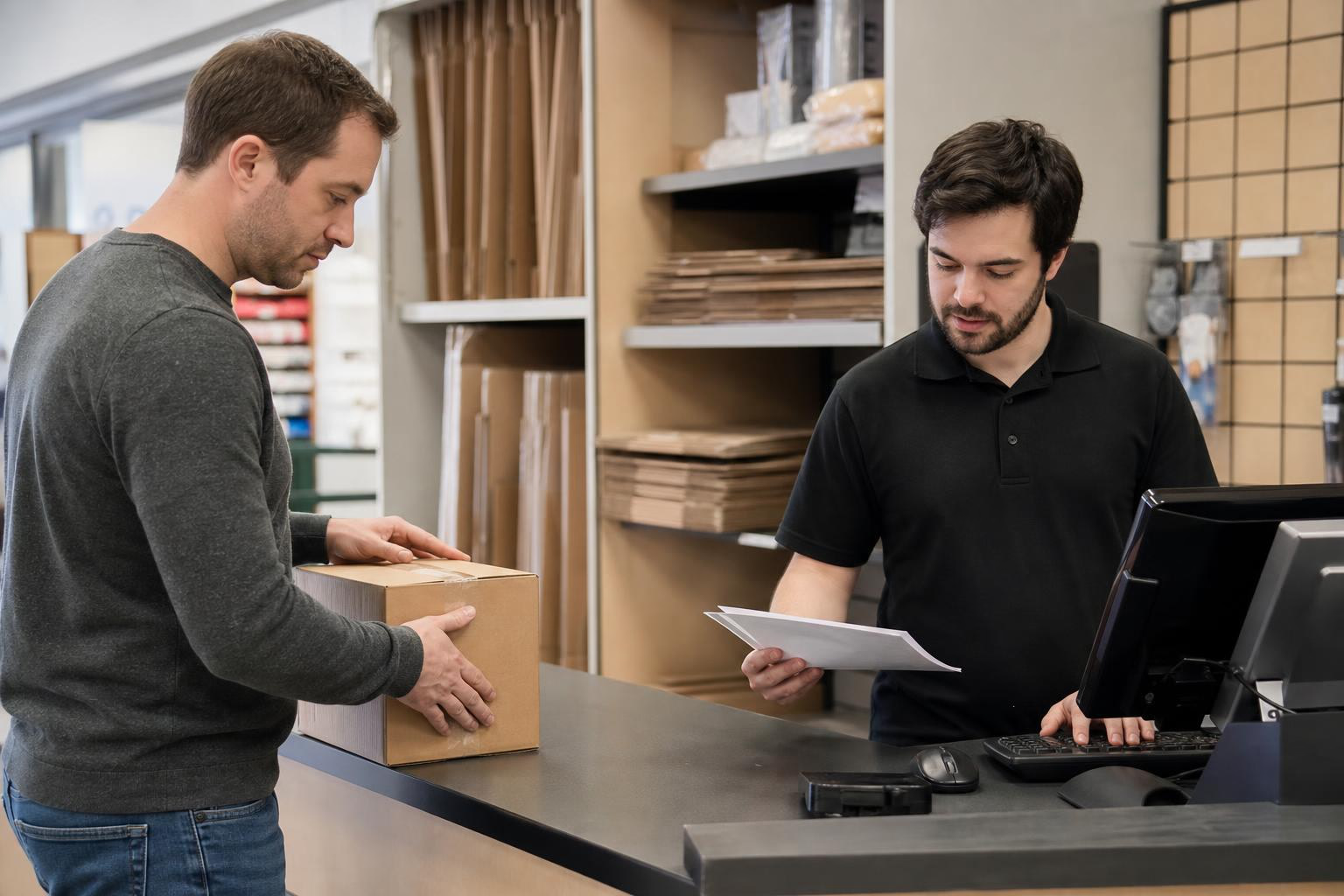
Who gets stuck paying retail rates? Walk-in customers. One-time shippers paying with a credit card at the counter. Anyone who doesn’t have a UPS payment account. If you’ve ever handed a package to a clerk and winced at the total, you paid retail.
Why Are UPS Store Prices Higher Than UPS.com?
Here’s something most people don’t realize: The UPS Store is not UPS. Each location is an independently owned franchise. The person behind the counter is a small business owner paying commercial rent, employee wages, utilities, insurance, and a royalty fee of 5% of gross sales to the corporate parent. All of those costs get baked into what you pay.
The markup varies by location. Analysis from shipping industry sources puts the range at 10–50% above direct UPS rates, with some packages costing twice as much as shipping through UPS.com or a UPS Customer Center. Each franchise owner has flexibility to set markup percentages within corporate guidelines, which is why prices can differ between two UPS Stores in the same city.
Real-World Price Gaps
The gap between counter and online rates isn’t theoretical. One blogger documented being quoted “more than double” what UPS.com showed for a small international package, with the store’s total landing somewhere north of $300. Another commonly cited example: a 26-pound package measuring 51×20×10 inches was quoted at $170 at a UPS Store but cost just $50 when shipped directly through UPS.com.
Practitioners on Reddit are blunt about this. A frequently upvoted comment on r/UPS states the consensus plainly: “Literally anything is going to be cheaper than walking into a UPS Store.” On the Practical Machinist forums, users report that online rates are typically “half price compared to going into the USPS or UPS Store.”
If you want to understand how to calculate shipping costs yourself before visiting any store, that’s the single best way to avoid sticker shock.
Packing Service Fees Make It Worse
The shipping label isn’t the only markup. Forum users consistently flag packing services as the biggest hidden cost. One commenter warned: “Never have them package something for you. My friend had a guitar packaged through them, and they charged $29 for the box alone!” Between branded boxes, bubble wrap, packing peanuts, and labor, a $15 shipment can quickly become a $50 ordeal.
If you need boxes, buying your own beforehand from a shipping supply retailer or even Amazon saves substantially. Our guide on UPS box sizes and prices covers the standard dimensions and what you should expect to spend.
UPS Rate Tiers Explained
Understanding UPS’s pricing tiers is the key to knowing how to avoid retail counter rates at The UPS Store. There are four levels, and each one is progressively cheaper.
Retail Rates
This is the default tier. You pay retail rates when you ship from any UPS retail location without a linked account, don’t have a scheduled pickup, or pay with a one-time credit card transaction. It’s the most expensive way to ship with UPS, full stop.
Daily Rates
Daily rates are discounted prices available to customers who have a UPS account and, typically, a scheduled daily or recurring pickup. When you log into UPS.com with an account linked to daily rates, your pricing reflects those benefits automatically. Even without a pickup schedule, simply having a free UPS account and shipping online usually gets you published daily rates instead of retail rates.
The difference is significant. As of 2025, the UPS Ground daily rate for a 1-pound package starts around $11.32, according to carrier rate data. The retail rate for the same package is meaningfully higher.
Negotiated (Contract) Rates
These are custom discounts tailored to your business based on shipment volume, consistency, and annual spend. You negotiate them directly with a UPS account representative. Most individuals and small sellers won’t qualify, but if you’re shipping hundreds of packages a month, it’s worth a conversation.
Commercial Rates via Third-Party Platforms
This is where the real savings hide. Shipping software providers like Pirate Ship, Stamps.com, and ShipStation negotiate corporate-level discounts with carriers by aggregating volume across all their users, then pass those discounts through to you. You don’t need a business license or minimum volume. You just need an account on the platform.
In our analysis of over 9,000 rate quotes, online labels through these platforms commonly save 50–88% versus retail counter prices. On certain lanes, discounts can reach roughly 90% below what you’d pay at the counter. For a deeper look at how these shipping discounts work, we break down the mechanics and eligible platforms.
5 Ways to Avoid Paying Retail Counter Rates
Method 1: Buy Labels Through Shipping Software
This is the single most effective way to avoid retail counter rates at any UPS Store. Third-party shipping platforms have already done the negotiation for you.
Pirate Ship is free with no monthly fees or hidden costs. They pass through full UPS discounts, advertising savings of up to 89% off retail for UPS labels. It’s the best option if you ship occasionally and don’t want a subscription.
Stamps.com charges $19.99 per month but offers broader features including discounted USPS and UPS labels printed from home. No business is required to sign up. It’s a strong choice if you ship regularly across multiple carriers.
ShipStation is built for multi-carrier sellers, especially those on eBay, Etsy, or Shopify. It lets you compare USPS, UPS, and FedEx rates in one dashboard, with advertised discounts of 80–90% from major carriers.
All three let you print labels at home on a regular printer or a thermal label printer. You then drop the prepaid package at any UPS location or Access Point without paying the counter markup.
For a side-by-side breakdown, our label provider comparison guide walks through pricing, carrier access, and which platform fits different shipping volumes.
Method 2: Create a Free UPS.com Account and Ship Online
Even without third-party software, you can save meaningfully by creating a free account at UPS.com and printing your label there. This typically moves you from retail rates to published daily rates, which are lower across every service level.
The process takes five minutes: create an account, enter your package dimensions and destination, pay online, and print the label. You skip the franchise markup entirely.
Method 3: Print Online, Then Drop Off for Free
This is the move that combines online pricing with the convenience of a physical location. You create your discounted label online (through UPS.com, Pirate Ship, or any shipping platform), then physically drop the package at a UPS Store, UPS Customer Center, or UPS Access Point.
The critical point: dropping off a pre-labeled package at a UPS Store does not trigger the store’s retail markup. You already paid for the label at the online rate. The store simply accepts the package into the UPS network.
One eBay community member on a forum shared a useful trick: they use Pirate Ship for UPS labels but have the UPS Store clerk weigh and measure the package and provide a receipt. That receipt serves as proof against post-shipment billing adjustments if UPS later claims the dimensions were different.
Method 4: Use UPS Simple Rate for Heavy or Long-Distance Packages
UPS Simple Rate is a flat-rate option where you pay based on package size rather than weight or distance. There are five size tiers, with a maximum of 50 pounds and 1,728 cubic inches per package. The smallest tier starts around $10.45 as of 2025.
For heavy items going long distances, Simple Rate can beat standard UPS Ground rates by 20–40%. It’s particularly useful if you’re shipping dense items coast to coast.
There’s an important catch that most guides skip: The UPS Store cannot create Simple Rate labels in-store. You must create them online through UPS.com. This is another reason learning to print your own labels pays off. For help deciding between flat rate and standard pricing, our flat rate vs. regular shipping guide covers when each option wins.
Method 5: Compare Across Carriers Before You Ship
UPS isn’t always the cheapest option. USPS, FedEx, and regional carriers like Sendle all compete on price, and the cheapest carrier varies based on weight, dimensions, and distance.
With discounted rates, UPS Ground Saver technically beats USPS Ground Advantage starting at 9 ounces in many scenarios. But the gap is often under a dollar, and USPS wins for lightweight items. FedEx Ground Economy can undercut both for certain weight brackets. The only way to know is to compare actual prices for your specific package.
If you’re weighing UPS against other carriers, our FedEx vs UPS comparison covers service levels, surcharges, and pricing differences in detail.
UPS Access Points: The Free Drop-Off Alternative
A UPS Access Point is a third-party retail location (CVS, Staples, Michaels, and thousands of others) that accepts UPS package drop-offs. There are over 21,000 Access Points across the United States, making them more convenient than UPS Stores in many areas.
The rules are simple. All packages dropped at Access Points must already have a prepaid shipping label attached. Access Points do not sell or print labels. Drop-off is free and available to anyone with a pre-labeled package. No UPS account is required.
For many shippers, the workflow becomes: print a discounted label at home, drive to the nearest CVS or Staples, hand over the package, and get a scan confirmation. No line, no upsell, no counter rates.
One thing to watch: if you need a UPS pickup instead of dropping off, pickups through platforms like Pirate Ship are not free. Same-day UPS pickups typically cost around $10, which a Bogleheads forum user flagged as an unexpected charge. USPS, by contrast, offers free home pickups. You can schedule a free USPS pickup if you’re using USPS labels.
Key Numbers to Know in 2025
Understanding the current pricing environment helps you gauge how much you’re overpaying at the counter.
| Data Point | Detail |
|---|---|
| UPS 2025 general rate increase | 5.9% average |
| Real shipper impact (with surcharges) | 8–12% effective increase |
| UPS Store markup vs. direct UPS rates | 10–50%, sometimes over 100% |
| Savings from online labels vs. counter | 50–88% in typical quotes |
| Surcharges as a share of total UPS invoice | 30–40% |
| UPS Access Points in the US | 21,000+ |
Note that rates change throughout the year. Carriers adjust base prices, fuel surcharges, and peak-season surcharges on different schedules. The percentages above reflect 2025 conditions and will shift over time. Always check current rates before shipping.
For a broader look at why carriers add surcharges and how they affect your total cost, that guide explains the mechanics behind fuel, handling, and residential delivery fees.
The Bottom Line: Print at Home, Drop Off Anywhere
Every method for avoiding retail counter rates at The UPS Store comes back to one principle: create your label online. Whether you use Pirate Ship, Stamps.com, ShipStation, or even UPS.com directly, the act of printing your own label bypasses the franchise markup, gives you access to discounted rate tiers, and opens up free drop-off options at thousands of locations.
The counter exists for convenience, and that convenience carries a steep premium. Now that you know the alternative, there’s no reason to pay it.
Ready to see how much you can save on your next package? Enter your dimensions and ZIP codes into our shipping rate calculator to compare discounted rates across USPS, UPS, FedEx, and more.
Frequently Asked Questions
Can I drop off a pre-labeled package at The UPS Store without paying extra?
Yes. If you’ve already created and paid for a shipping label online (through UPS.com, Pirate Ship, or any shipping platform), you can drop the package at a UPS Store at no additional charge. The store’s retail markup only applies when you buy the label at the counter.
What’s the cheapest way to ship through UPS?
Buy your label through a third-party shipping platform like Pirate Ship (free) or Stamps.com (subscription). These platforms pass through commercial-level discounts that can save 50–88% compared to retail counter rates. Then drop the package at a UPS Access Point or schedule a pickup.
Is UPS Simple Rate available at The UPS Store?
No. UPS Simple Rate labels can only be created online through UPS.com. The UPS Store cannot generate Simple Rate labels in-store. This flat-rate option covers packages up to 50 pounds and 1,728 cubic inches, and it can save 20–40% on heavy, long-distance shipments.
Why does pricing vary between different UPS Store locations?
Each UPS Store is an independently owned franchise. Owners set their own markups within corporate guidelines based on their local rent, labor costs, and market conditions. This is why the same package can be quoted at different prices at two stores in the same city.
Do I need a business to get discounted UPS rates?
No. Individuals can access discounted rates by creating a free UPS.com account or by signing up for shipping software like Pirate Ship. No business license, tax ID, or minimum shipping volume is required.
How do UPS Access Points work?
UPS Access Points are partner retail locations (CVS, Staples, Michaels, and others) where you can drop off prepaid UPS packages for free. You need a label already attached to the package. The location scans it into the UPS network, and you’re done. There are over 21,000 Access Points across the US.
Are UPS pickup fees included when I buy a label online?
Not always. Unlike USPS, which offers free home pickups, UPS typically charges for pickup service. Same-day pickups often cost around $10. If you want to avoid this fee, drop your package at an Access Point or UPS Store instead.
How much did UPS rates go up in 2025?
UPS announced an average general rate increase of 5.9% for 2025. However, the real impact for most shippers is higher, in the range of 8–12%, once surcharges for fuel, residential delivery, and peak season are factored in. Surcharges alone can represent 30–40% of a total UPS invoice.