
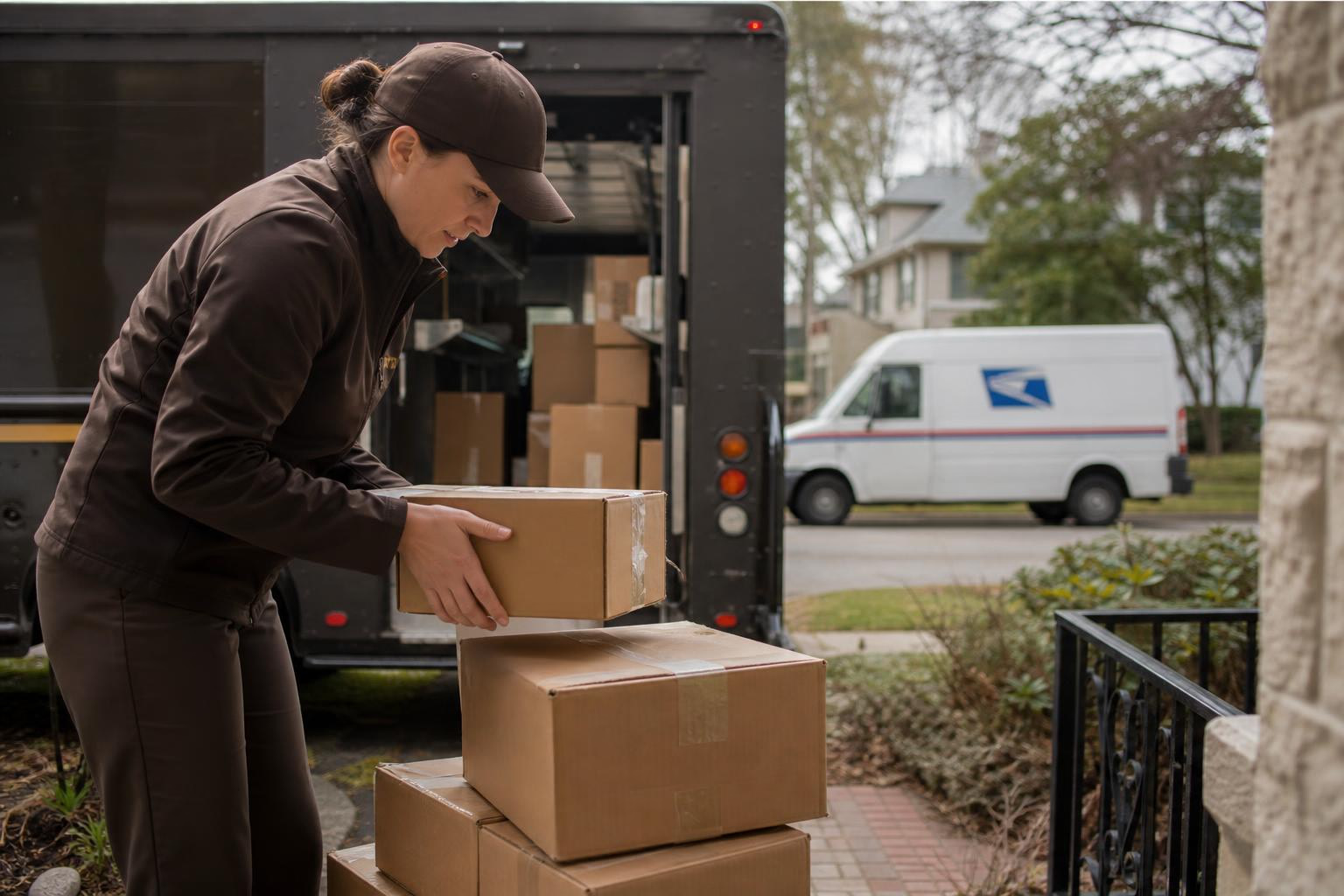
Cost: UPS vs USPS in 2026 — Rates, Surcharges & Tips
TL;DR
USPS is almost always cheaper for packages under 2 pounds shipped to residential addresses. UPS becomes competitive around 6 to 10 pounds and often wins for heavier shipments over 20 pounds. But base rates tell only half the story. UPS surcharges for residential delivery, fuel, and remote areas can add $10 or more per package, while USPS rolls those costs into its published rates. The cheapest option depends on your specific package weight, dimensions, and destination.
Want to skip the reading and just compare prices? Compare rates instantly for your exact package across USPS, UPS, and FedEx.
Understanding the Two Carriers
Before comparing the cost of UPS vs USPS, it helps to understand what makes them structurally different. USPS is the United States Postal Service, a government agency required to deliver to every address in the country, including PO Boxes and rural routes. UPS (United Parcel Service) is a private logistics company that operates its own fleet and network optimized for package delivery.
These different structures produce different pricing logic. USPS subsidizes its universal service mandate by building costs like fuel and residential delivery into flat published rates. UPS prices each component separately, which means the sticker price you see is rarely the final price you pay.
Both carriers raised rates significantly in 2026. UPS implemented an average 5.9% general rate increase, while USPS raised Ground Advantage rates by 7.8% on average and Priority Mail by 6.6%. On top of that, USPS added an additional 8% surcharge on Priority Mail, Priority Mail Express, and Ground Advantage in March 2026. The net effect for most shippers is 10 to 18 percent higher costs once all changes are factored in.
Key Terms That Affect UPS vs USPS Costs
Understanding a handful of pricing concepts will save you from choosing the wrong carrier and overpaying. Here is every term that matters when comparing the cost of UPS vs USPS.
Shipping Zone
Both carriers divide the country into numbered zones (1 through 9) based on distance from origin to destination. Zone 1 is local, Zone 9 is coast to coast. Higher zones cost more. A 5 lb package might cost $8 within your zone but $15 to ship across the country. Both UPS and USPS use zones, so this variable affects the comparison equally.
Retail Rate vs. Commercial Rate
This is the single biggest pricing concept most people miss. Retail rates are what you pay at a UPS Store counter or a Post Office window. Commercial rates (sometimes called “daily rates” at UPS or “commercial base pricing” at USPS) are discounted prices available to anyone who buys labels online through shipping software.
The gap is enormous. USPS commercial rates offer up to 40% savings on Priority Mail and Ground Advantage compared to retail window prices. Practitioners on the WoodBarter woodworking forum report that the same box quoted at a UPS Store was dramatically cheaper when purchased through Pirate Ship, sometimes by 50% or more. One member found a large box was $24 via UPS online versus what would have been far higher at the counter.
If you want to understand how to access these lower rates, our guide on discounted shipping rates explains the process.
Dimensional Weight (DIM Weight)
Carriers charge based on whichever is greater: actual weight or dimensional weight. Dimensional weight is calculated by multiplying length × width × height (in inches) and dividing by a number called the DIM divisor.
Here is where UPS and USPS have historically differed. UPS uses a DIM divisor of 139. USPS has used 166, which means USPS calculated dimensional weight more favorably for bulky, lightweight items. A box measuring 18" × 14" × 12" would have a DIM weight of about 22 lbs at UPS but only 18 lbs at USPS.
That advantage disappears on July 12, 2026. USPS is moving to a 139 DIM divisor across all domestic competitive products. More on that change below.
Also worth noting: since August 2025, both UPS and FedEx round every fractional inch up before calculating dimensional weight. A box measuring 11.9 inches on one side gets calculated as 12 inches. For a deeper look at how this math works, see our guide on calculating shipping costs.
Residential Surcharge
This is one of the most important differences when comparing the cost of UPS vs USPS for home deliveries. UPS charges a residential delivery surcharge of $5.15 to $8.25 per package in 2026. That fee applies to every single shipment going to a home address.
USPS does not charge a residential surcharge. The rate you see is the rate you pay, whether you are shipping to an apartment, a house, or a rural farmstead. For sellers shipping to consumers, this structural advantage makes USPS significantly cheaper on a per-package basis for lighter items.
Fuel Surcharge
UPS applies a fuel surcharge as a percentage on top of every shipment’s base rate. At current diesel prices around $3.85 per gallon, the UPS Ground fuel surcharge runs approximately 22.75%. That means a $10 base rate becomes $12.28 before any other fees.
USPS does not charge a separate domestic fuel surcharge. Fuel costs are baked into their published rates. This makes USPS pricing more predictable, even if rate increases partly reflect fuel costs.
Delivery Area Surcharge (DAS)
UPS charges extra fees for deliveries to remote, rural, or “extended” ZIP codes. The delivery area surcharge ranges from $3.65 to $19.30 depending on how remote the destination is. USPS delivers everywhere at the same rate since universal service is part of its mandate.
If you regularly ship to rural customers, USPS has a clear cost advantage on this front.
Flat Rate Shipping
USPS offers Flat Rate boxes in small, medium, and large sizes. You pay a fixed price regardless of weight (up to 70 lbs) or destination. A Large Flat Rate Box costs around $22.80 and ships anywhere in the country. This is an exceptional deal for dense, heavy items.
UPS offers Simple Rate as its flat-rate equivalent, but it is generally more expensive. A heavy item that costs $19.15 to ship in a USPS Medium Flat Rate Box could cost $27.55 with UPS Simple Rate. For a detailed breakdown, check our guide on flat rate vs. regular shipping.
General Rate Increase (GRI)
Both carriers raise rates annually, usually in January. The GRI is the percentage by which base rates go up across the board. For 2026, UPS went up 5.9% and USPS went up 7.8% on Ground Advantage. USPS packages under one pound took the hardest hit, averaging a 12.2% increase. These annual increases compound, which is why comparing costs every year matters.
Cost Comparison by Weight Bracket
The question of whether UPS or USPS costs less depends heavily on package weight. Here is how the two carriers compare across different weight ranges in 2026.
Under 1 Pound
Winner: USPS, clearly.
USPS Ground Advantage starts around $4 to $7 for packages under 1 lb. First-Class Package Service runs $4 to $5 for items under 13 oz. UPS Ground retail rates for the same weight start at $10 to $15, with a minimum charge of approximately $12 in 2026.
There is no scenario where UPS is cheaper for sub-pound packages to residential addresses. For a full breakdown of USPS services and rates, see our USPS shipping rate guide.
1 to 5 Pounds
Winner: USPS in most cases.
USPS Priority Mail runs $8 to $15 in this range depending on zone. UPS Ground will cost more once you add the residential surcharge and fuel surcharge to the base rate. USPS Flat Rate boxes are particularly competitive here: a Medium Flat Rate Box at $15.75 can hold up to 70 lbs and ships anywhere domestically.
5 to 10 Pounds
Winner: It depends.
This is the crossover zone where the cost of UPS vs USPS gets genuinely close. An 8 lb box from Chicago to Denver might cost around $12 via USPS Priority but $10 to $11 via UPS Ground. However, those UPS numbers are often pre-surcharge commercial rates. Once you add the residential surcharge ($6.50) and fuel surcharge (roughly 22.75%), the UPS total can climb back above USPS.
Reddit’s r/Shopify community confirms this pattern. The most upvoted finding in a popular thread comparing the two carriers was that USPS beats UPS for most sizes and weights under 20 lbs on both cost and speed.
10 to 20 Pounds
Winner: UPS becomes competitive, especially with negotiated rates.
At this weight range, UPS Ground base rates start to undercut USPS, particularly for longer-zone shipments. But the comparison is only fair if you account for surcharges. A business shipping 50+ packages per week can negotiate UPS rates that genuinely beat USPS. An individual shipper paying retail or near-retail UPS rates will likely still find USPS cheaper.
For a deeper comparison at this weight, read our guide on UPS vs USPS for 20 lb packages.
20 to 50 Pounds
Winner: UPS often wins.
A 25 lb package shipping coast to coast runs $30 to $45 with USPS, but UPS or FedEx Ground rates often fall in the $25 to $35 range, especially with commercial pricing. The UPS advantage grows as weight increases because USPS rates scale more steeply by weight at higher brackets.
We have a dedicated guide for shipping 50 lb packages that compares exact scenarios.
50 to 70 Pounds
Winner: Compare carefully.
Both carriers handle this range, but USPS tops out at 70 lbs per package. Rates at this weight are high for both. Shape matters enormously here because dimensional weight often exceeds actual weight for large boxes. Get quotes from both carriers for your specific dimensions.
Over 70 Pounds
Winner: UPS by default.
USPS cannot ship packages over 70 lbs. UPS handles packages up to 150 lbs. If your shipment exceeds 70 pounds, UPS (or FedEx) is your only parcel option.
Hidden Costs That Change the Answer
Base rate tables are misleading. Here is a worked example showing how surcharges transform the real cost of UPS vs USPS.
The “All-In” Math for UPS
Consider a 7 lb package shipping from Los Angeles to Atlanta (Zone 7) to a residential address:
- UPS Ground base rate: approximately $14.50
- Residential surcharge: +$6.50
- Fuel surcharge (22.75% of base): +$3.30
- Total: $24.30
The same package via USPS Priority Mail would cost approximately $15.50, with no additional surcharges. That is a $9 difference, almost entirely explained by fees that do not appear in UPS rate tables.
Package Shape Triggers Additional Fees
UPS charges an Additional Handling Surcharge for packages that exceed certain dimensions (over 48 inches on the longest side or over 30 inches on the second-longest side) or weigh over 50 lbs. This fee adds $15 to $30 per package in 2026.
Real-world examples from the WoodBarter woodworking forum illustrate this dramatically. One user compared rates for a long, skinny pendulum box and found UPS quoted $73 while USPS Ground came in at $17. For a different box with lead ingots (small but heavy), UPS was $16 and USPS was $15, nearly identical. The cheapest carrier changed completely based on box shape and weight.
Other Hidden Cost Differences
Saturday delivery: USPS delivers on Saturdays at no extra charge. UPS charges a Saturday delivery fee unless you use UPS SurePost (which hands off to USPS for final delivery anyway).
Package pickup: USPS offers free scheduled pickups from your address. UPS charges for pickups unless you have a daily pickup account.
Claims processing: UPS typically processes online claims in 7 to 10 days. USPS can take 30 or more days and requires physical paperwork for claims over $200. If you ship high-value items frequently, faster claims resolution has real financial value.
The July 2026 DIM Divisor Shift
This is the biggest pricing change of the year for anyone shipping bulky, lightweight items. On July 12, 2026, USPS is lowering its dimensional weight divisor from 166 to 139, matching UPS and FedEx.
What This Means in Practice
A box measuring 20" × 16" × 12" currently has a DIM weight of about 23 lbs under USPS’s 166 divisor. After July 12, the same box will have a DIM weight of 28 lbs under the new 139 divisor. That is a 20% increase in billable weight for the same box.
Who Gets Hit Hardest
Sellers shipping apparel, home goods, pillows, lampshades, or anything that is physically large but light will see significant cost increases with USPS. These categories have historically leaned on USPS specifically because of its more generous DIM divisor.
What to Do About It
Right-sizing your packaging becomes critical. Eliminate empty space in boxes. Consider USPS Flat Rate boxes, which are exempt from dimensional weight calculations, as an alternative for items that fit. And compare rates after July 12, because the carrier that was cheapest before may not be cheapest after. For practical tips, read our guide on minimizing dimensional weight charges.
How to Get the Lowest Rate from Either Carrier
The cost of UPS vs USPS is not fixed. How you buy the label matters as much as which carrier you choose.
Never Pay Retail at a UPS Store
Walking into a UPS Store and shipping a package at the counter is the most expensive way to use UPS. This is not an exaggeration. The retail-to-commercial gap at UPS can be 40 to 88% higher than online rates. A forum member on WoodBarter put it bluntly: “Going to UPS is guaranteed the most expensive way to ship with them.”
Buy Labels Online for Commercial USPS Rates
USPS commercial pricing is available to anyone who buys labels through approved shipping software. You do not need a business account or minimum volume. For occasional shippers, our guide on avoiding high counter fees walks through the exact steps.
Compare Rates for Every Shipment
There is no single answer to which carrier is cheaper. The cheapest option changes based on weight, dimensions, destination zone, and whether the address is residential or commercial. The smartest approach is to compare rates for each shipment rather than defaulting to one carrier out of habit.
Compare UPS vs USPS rates for your exact package dimensions and destination to see real prices side by side.
Speed as a Tiebreaker
When costs are similar, delivery speed can break the tie. UPS Ground typically delivers in 1 to 5 business days. USPS Ground Advantage arrives in 2 to 5 business days, though the January 2026 service standard changes mean longer routes can now take 6 to 7 days. UPS generally has a 1 to 2 day transit time edge on cross-country ground shipments.
Why USPS Rates Keep Climbing Faster
USPS rate increases have outpaced UPS for three consecutive years. The 2026 increases, 7.8% for Ground Advantage versus UPS’s 5.9%, continue this trend. The reason: USPS continues to grapple with significant financial losses and has told Congress that the Postal Service could run out of cash by the end of 2026 without drastic action. This financial pressure makes further above-inflation USPS rate hikes likely. Shippers who depend entirely on USPS should factor this trajectory into their planning.
Frequently Asked Questions
Is UPS or USPS cheaper for a 5 lb package?
USPS is almost always cheaper for a 5 lb package to a residential address. USPS Priority Mail will typically run $10 to $14 depending on zone, while UPS Ground costs $12 to $16 at base, then adds a $6.50 residential surcharge plus fuel surcharge, pushing the total well above USPS.
Does USPS charge a residential surcharge?
No. USPS delivers to residential and commercial addresses at the same rate. UPS charges a residential delivery surcharge of $5.15 to $8.25 per package in 2026.
What is the maximum weight for USPS vs UPS?
USPS accepts packages up to 70 pounds. UPS accepts packages up to 150 pounds. If your shipment weighs more than 70 lbs, UPS is your only standard parcel option.
Can UPS deliver to PO Boxes?
No. UPS cannot deliver to PO Boxes. Only USPS can deliver to PO Boxes. UPS SurePost, a hybrid service, hands packages to USPS for final delivery and can reach PO Boxes, but standard UPS Ground cannot.
What is the UPS fuel surcharge percentage in 2026?
The UPS Ground fuel surcharge is approximately 22.75% at current diesel prices around $3.85 per gallon. This percentage fluctuates with fuel prices and is applied on top of the base shipping rate for every UPS Ground package.
When does USPS change its DIM divisor in 2026?
USPS is changing its dimensional weight divisor from 166 to 139 on July 12, 2026. This applies to Priority Mail, Priority Mail Express, Ground Advantage, and Parcel Select. After this date, USPS will calculate dimensional weight the same way UPS and FedEx do.
Is it cheaper to buy a UPS label online or at the UPS Store?
Buying online is dramatically cheaper. Retail counter rates at UPS Stores are the highest prices UPS offers. Purchasing labels through shipping software or UPS.com gives you access to daily or commercial rates that can be 40% or more lower than counter prices.
Should I use the same carrier for every shipment?
No. The cheapest carrier changes based on package weight, dimensions, destination zone, and address type. The most cost-effective approach is to compare both UPS and USPS for each shipment. You can compare shipping rates across carriers in seconds to find the best price every time.